
Introduction
A puppy socialization checklist is a structured guide that helps you introduce your new puppy to different people, animals, environments, sounds, surfaces, and handling experiences during an important developmental period. Used carefully, it can help your puppy build confidence, adapt to everyday situations, and develop healthier responses to unfamiliar experiences.
This guide is built for new puppy owners in Fredericksburg, Virginia and the surrounding areas, including Stafford, Spotsylvania, King George, and beyond, who want a clear, actionable roadmap for socialization rather than vague advice. Whether you brought your puppy home last weekend or you are preparing for one arriving next month, the checklist and schedule below will set you on the right path.
The direct answer: There is no universal number of experiences every puppy must complete. Effective socialization focuses on varied, safe, and positive exposure during the first several months of life, followed by continued practice through adolescence and adulthood. The appropriate pace depends on the puppy’s temperament, health, vaccination status, and response to each experience.
By following this guide, you will:
- Understand exactly when and how the critical socialization window works
- Have a week-by-week schedule with specific goals for each stage of puppyhood
- Access a comprehensive checklist covering key puppy socialization experiences
- Learn how to recognize and respond to fear, overexcitement, and common setbacks
- Build the foundation your puppy needs for success in formal obedience training later
Early, positive socialization can reduce the risk of later problems such as fear, avoidance, difficulty with handling, and reactive responses to unfamiliar situations. However, socialization is only one part of behavioral development. Genetics, health, training history, environment, and later experiences can also influence how a dog responds to people, animals, and everyday events.

Understanding Puppy Socialization
Socialization is the process of giving your puppy controlled, positive exposure to new experiences during an important developmental period. For a practical way to organize these experiences, use this puppy socialization checklist to make sure your puppy is gradually exposed to a variety of people, animals, environments, and sounds. It helps puppies learn that different-looking people, other animals, unfamiliar surfaces, and everyday sounds can be normal parts of their environment. Positive early experiences can support confidence and adaptability, but adult behavior is also influenced by genetics, health, training, environment, and later experiences.
Critical Socialization Period
The most important socialization period occurs during a puppy’s first several months of life, with the first three months generally considered especially influential. The 8–16 week period is especially important, so understanding what to focus on during this puppy socialization window can help owners make the most of this developmental stage. Puppies are often more receptive to new people, animals, surfaces, sounds, and environments during this stage. Experiences during this period can influence later behavior, but learning and social development continue throughout adolescence and adulthood.
Puppies may become more cautious or sensitive at different stages of development, but these changes do not follow an identical schedule for every dog. Owners should watch the individual puppy’s body language instead of relying on fixed fear-period dates. Begin safe socialization early, keep experiences manageable, and continue introducing appropriate new experiences throughout the puppy’s first year and beyond.
If you are unsure where your puppy falls or how to begin, a puppy training consultation can help establish a temperament baseline and create a personalized exposure plan from day one.
Positive vs. Negative Experiences
Not all exposure is equally beneficial. A frightening or overwhelming encounter, such as being rushed by another dog or trapped near an intense sound, can contribute to future fear or avoidance. Reduce that risk by controlling distance, allowing the puppy to retreat, and avoiding situations that exceed the puppy’s ability to remain calm. Socialization should focus on positive, low-stress exposures where the puppy feels safe to observe, investigate, and retreat if needed.
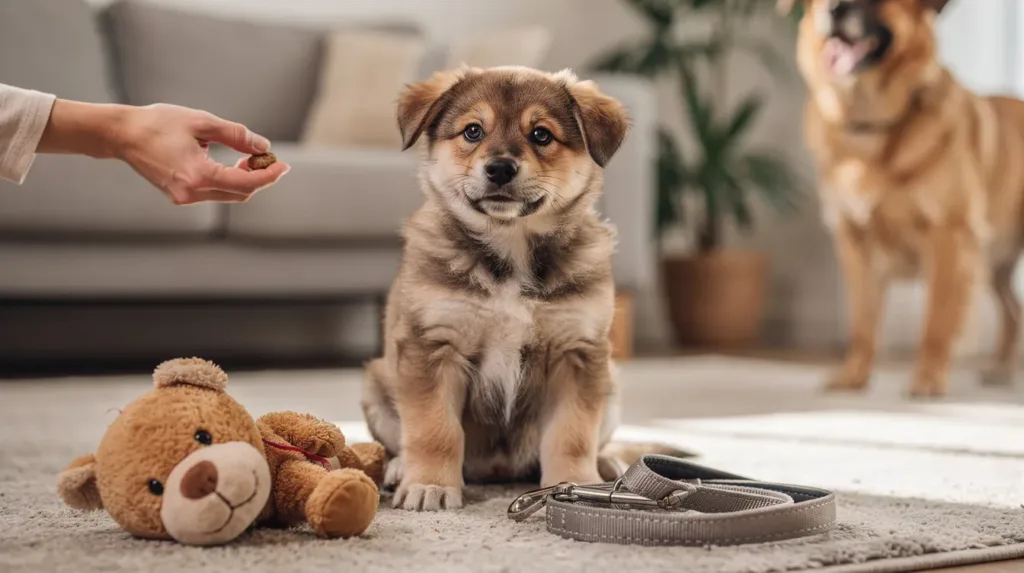
Short, stress-free encounters help build lifelong confidence in puppies. The distinction is crucial: beneficial socialization means the puppy is calm, curious, or happily engaged. Harmful exposure means the puppy is forced into a situation where it freezes, cowers, or tries to flee. Positive associations should be paired with new experiences during socialization. Use treats to create positive associations during socialization, and let your puppy set the pace. Quality of exposure always matters more than quantity.
This principle connects directly to the practical categories below, where every recommendation emphasizes gradual introduction, positive reinforcement, and reading your puppy’s body language before progressing.
Essential Socialization Categories
Comprehensive socialization addresses four main categories: people and handling, animals and dogs, environments and surfaces, and sounds and stimuli. Each category targets a different dimension of your puppy’s world, and gaps in any one area can create problems later. Puppies should be introduced to diverse people, sounds, surfaces, and environments to develop the broadest possible comfort zone.
People and Handling
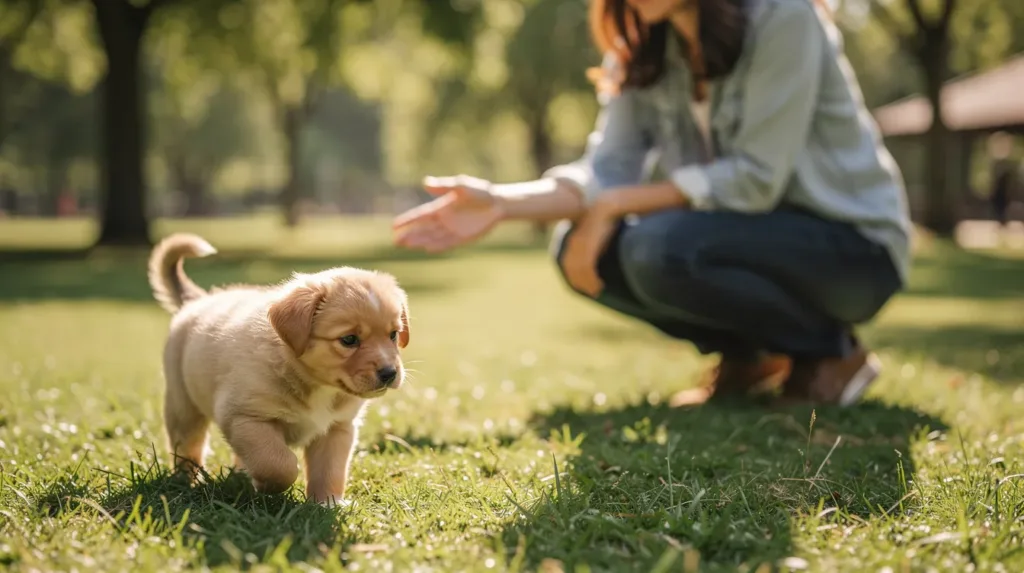
Your puppy needs to meet people across a wide spectrum of ages, appearances, and behaviors. This includes children, teenagers, adults, and seniors. It also means people wearing hats, sunglasses, uniforms, and using mobility devices like canes or wheelchairs. Introduce your puppy to a variety of people with different ages, appearances, clothing, movements, and voices. Focus on calm, positive encounters rather than reaching a fixed number. Allow the puppy to observe or approach voluntarily, and create additional distance when the puppy shows hesitation or stress.
Daily handling should include gently touching and examining different parts of your puppy’s body. Practice touching the ears, paws, tail, muzzle, and belly. Briefly examine the mouth, fit and remove the collar, introduce a brush, and allow your puppy to become familiar with nail-care tools and towel drying. Keep sessions brief and pair cooperation with treats, praise, or play. This preparation can make veterinary exams, grooming appointments, and routine care easier as your puppy matures.
Specific protocols for children: always supervise, teach children to be calm and still, and let the puppy approach the child rather than the reverse. For elderly individuals or people with equipment such as walkers or wheelchairs, start at a distance and close the gap gradually over multiple sessions.
Animals and Dogs
Controlled interactions with healthy, socially appropriate dogs can be helpful when the dogs’ health status and temperament are known. Begin with carefully supervised one-on-one introductions or a properly managed puppy class. Puppies should also learn to observe other dogs calmly without expecting direct interaction or play.
Exposure to other species broadens your puppy’s ability to generalize calm behavior. If cats share your household, supervised introductions should start early. In the Fredericksburg area’s mix of suburban and rural settings, you may also have opportunities for distance exposure to horses, goats, or livestock. Always observe from behind a barrier and at a comfortable distance.
Guidelines for puppy playdates: choose dogs that are fully vaccinated and have calm, tolerant temperaments. Keep initial sessions short (10–15 minutes), watch for appropriate play signals such as play bows and loose body language versus signs of overwhelm, and interrupt if play becomes too rough.
Environments and Surfaces
Introduce your puppy gradually to different safe surfaces, such as grass, pavement, carpet, tile, gravel, wet ground, ramps, and low platforms. There is no required number to complete. Reward calm exploration and avoid forcing your puppy across a surface that causes significant hesitation.
Visit a variety of appropriate locations as your puppy’s health, vaccination status, and confidence allow. Options may include quiet neighborhoods, controlled outdoor spaces, parking areas, veterinary happy visits, and businesses that confirm dogs are permitted. Avoid high-risk areas used by unknown dogs unless your veterinarian advises that the exposure is appropriate.
Sounds and Stimuli
Introduce your puppy to a variety of household sounds, such as vacuum cleaners, hair dryers, doorbells, televisions, and kitchen appliances. Environmental sounds may include traffic, motorcycles, sirens, children playing, and birds. Begin at a low volume or safe distance, pair the sound with something positive, and increase the intensity only when your puppy remains comfortable. Your puppy’s emotional response is more important than the number of sounds completed.
Visual stimuli matter too. Umbrellas opening, bicycles passing, joggers, skateboarders, and strollers can startle an unprepared puppy. Introduce them at a distance first, reward calm observation, and decrease distance over time. Sudden movements and unexpected events such as a door slamming or a bag blowing across the ground can be practiced at home in controlled ways to build resilience.

Complete Puppy Socialization Checklist
The following schedule and checklist give you a concrete framework for tracking your puppy’s socialization progress. Socialization should consist of several new positive experiences each week, with sessions kept short and always ending on a positive note. Socializing puppies is easier than socializing adult dogs, so the time you invest now during puppyhood pays dividends for years.
Week-by-Week Socialization Schedule
Weeks 8–10, Early Foundations: Focus on settling into the home, gentle handling, crate familiarity, short car rides, household sounds, safe surfaces, and carefully selected interactions. Consult your veterinarian about local disease risks and appropriate exposure outside the home.
Weeks 10–12, Gradual Expansion: Add new people, clothing types, surfaces, sounds, and controlled environments as long as the puppy remains comfortable. Public observation may be done from a secure carrier, vehicle, clean blanket, or other protected location when recommended by your veterinarian.
Weeks 12–16, Broader Experiences: Continue introducing new environments and everyday movement, such as bicycles, umbrellas, traffic, children, and calm dogs. A properly managed puppy class may be appropriate when vaccination, deworming, sanitation, and health requirements are followed.
After 16 Weeks, Continued Practice: Continue offering varied experiences throughout adolescence and adulthood. Revisit familiar situations in new locations and at different intensity levels while rewarding calm, appropriate behavior.
Safety Note: Do not postpone all socialization until the vaccination series is complete. At the same time, avoid dog parks and other heavily used areas where dogs have unknown vaccination or disease status. Follow your veterinarian’s recommendations based on your puppy’s health and local disease risk. AVSAB notes that puppy classes may begin as early as seven to eight weeks when puppies have received an initial vaccine at least seven days earlier, have been dewormed, and remain current on vaccinations.
Comprehensive Experience Checklist
| Category | Specific Experience | Priority | Notes |
| People | Family members and familiar visitors | Essential | Pair calm handling and greetings with positive reinforcement. |
| People | People of different ages and appearances | Essential | Include children, adults, and seniors without requiring a fixed number. |
| People | Hats, sunglasses, uniforms, and unusual clothing | Important | Begin at a comfortable distance and reward calm observation. |
| People | Mobility devices | Important | Allow the puppy to observe walkers, wheelchairs, and canes without forcing an approach. |
| People | Joggers, cyclists, and skateboarders | Important | Practice calm observation before decreasing distance. |
| Dogs | Calm, healthy dog of known temperament | Essential | Use short, supervised interactions. |
| Dogs | Dogs of different sizes and appearances | Important | Direct interaction is optional. Calm observation is also valuable. |
| Dogs | Structured puppy class | Important | Follow veterinary guidance and the class’s vaccination, sanitation, and health requirements. |
| Animals | Household cats | Important when applicable | Begin behind a barrier and supervise interactions. |
| Animals | Livestock or other animals | Optional | Observe from a secure barrier and comfortable distance. |
| Surfaces | Grass, pavement, carpet, and tile | Essential | Reward exploration and allow the puppy to move at its own pace. |
| Surfaces | Gravel, sand, wet grass, and mulch | Essential | Do not force the puppy onto a surface that causes significant stress. |
| Surfaces | Ramps, stairs, and low platforms | Important | Provide physical support and use safe, stable equipment. |
| Surfaces | Household appliances and television | Essential | Begin quietly and increase volume gradually. |
| Sounds | Doorbells and kitchen sounds | Essential | Pair the sound with treats, play, or another positive experience. |
| Sounds | Traffic, sirens, and motorcycles | Important | Begin at a distance where the puppy remains comfortable. |
| Sounds | Recorded thunder or fireworks | Optional | Use very low volume and stop if the puppy shows distress. |
| Sounds | Recorded thunder/fireworks | Important | Very low volume, high-value treats |
| Environments | Different rooms and safe home areas | Essential | Include the yard or garage when safe. |
| Environments | Quiet outdoor areas | Essential | Follow veterinary guidance about disease exposure. |
| Environments | Veterinary happy visits and dog-friendly businesses | Important | Confirm permission and health requirements before visiting. |
| Environments | Parks, downtown areas, and shopping exteriors | Important | Avoid heavily contaminated or dog-trafficked surfaces. |
| Environments | Car rides | Essential | Begin with short trips and secure the puppy safely. |
| Handling | Indoor leash introduction | Essential | Allow the puppy to become comfortable before adding distractions. |
| Handling | Nail-care introduction | Essential | Introduce clippers or a grinder gradually and trim only when it can be done safely. |
| Handling | Nail clipper introduction | Essential | Touch only, no cutting yet |
| Handling | Brushing and towel drying | Important | Keep sessions brief and reward cooperation. |
| Handling | Mock veterinary handling | Important | Practice gentle touching, lifting, and examination without forcing restraint. |
Track each exposure with the date, your puppy’s reaction, the reward used, and any notes about progress. Observe your puppy’s body language throughout each experience. Behaviors such as repeated lip licking, yawning, a tucked tail, whale eye, freezing, retreating, or refusing treats may indicate that your puppy needs more distance, lower intensity, or a break.
Local Fredericksburg Socialization Opportunities
Fredericksburg and the surrounding counties may offer a useful variety of socialization settings. Downtown sidewalks can provide controlled exposure to foot traffic, while appropriate parks and quiet areas in Stafford County and Spotsylvania may offer lower-intensity environments. Dog-friendly businesses, permitted café patios, and shopping center exteriors may provide additional practice when owners confirm current pet policies. Rural areas in King George County and Caroline County may also offer opportunities to observe open terrain or livestock safely from a distance.
Off Leash K9 Training Fredericksburg lists a Puppy Consultation for dogs under five months that introduces obedience training, housebreaking, crate training, socialization, and pack structure. The website also lists an Online Puppy Training Course and Basic Marker Mastery™, a four-week reward-based program. Owners can discuss their puppy’s age, behavior, and training goals during a consultation to determine which available option may be appropriate.
Common Challenges and Solutions
Even with the best checklist in hand, socialization rarely goes perfectly. Here are the most common obstacles new puppy owners encounter and practical strategies for working through them.
Fearful or Overwhelmed Puppy
Signs that your puppy is overwhelmed include cowering, tail tucking, freezing in place, attempting to flee, excessive lip licking, or yelping. If you see these signals, stop the exposure immediately. Do not push your puppy closer to the stimulus or try to “show them it’s okay.”
Step-back strategies: return to a version of the experience your puppy can handle comfortably, such as greater distance, lower volume, or fewer people. Use counter-conditioning by pairing the scary stimulus with high-value treats at a distance where the puppy notices it but remains calm. Gradually decrease distance over multiple sessions. Allow rest days between challenging exposures to prevent cumulative stress.
If fear reactions are severe, persistent, or worsening, consult your veterinarian and an appropriately qualified behavior or training professional. Medical problems, pain, developmental factors, and past experiences may all contribute to fearful behavior. Off Leash K9 Training Fredericksburg offers consultations and behavior-focused training options, but the appropriate recommendation should be based on the puppy’s specific behavior rather than automatically placing a fearful puppy in an aggression program.
Limited Socialization Opportunities
Before the vaccination series is complete, exposure should be planned carefully rather than stopped entirely. Avoid dog parks, contaminated surfaces, and areas heavily used by dogs of unknown health status. Safer options may include controlled home visits, protected public observation, clean private properties, properly managed puppy classes, and interaction with known healthy dogs, based on guidance from your veterinarian. Puppies can be socialized to novel stimuli safely even before full vaccination.
Creative solutions include inviting visitors to your home wearing different clothing, carrying umbrellas, or wearing hats. Carry your puppy in your arms or a secure carrier through pet-friendly stores and busy sidewalks. Play recorded sounds through speakers during meals. Set up novel surfaces in your yard or garage, such as a cookie sheet, tarp, or piece of astroturf. Arrange playdates only with dogs whose vaccination status you can verify. These controlled approaches can help reduce avoidable disease exposure while allowing socialization to continue under your veterinarian’s guidance.
Overexcited or Inappropriate Behavior
Puppies who jump on people, mouth hands during greetings, or become too overstimulated to settle may be displaying common puppy behavior. Without consistent guidance, these patterns can develop into difficult adult habits. Managing puppy biting, jumping, and overexcitement during socialization can help the puppy practice calmer ways to interact.
Teach impulse control alongside socialization from the start. Before greeting a new person, ask for a sit. Reward calm behavior with the greeting itself. The puppy learns that stillness earns access to the interesting thing. If your puppy becomes overstimulated, step away, give them a moment to settle, and try again at lower intensity. Balance between socialization and basic obedience training is key. The two reinforce each other. Structured training can complement socialization by teaching attention, calm greetings, leash skills, and impulse control. Reward-based training and carefully managed exposure can work together to help a puppy develop useful behavior around people, dogs, and everyday distractions.
Conclusion and Next Steps
Systematic, low-stress socialization during the first several months is an important part of supporting your puppy’s long-term behavioral development. Positive exposure can help a puppy become more comfortable with handling, veterinary visits, grooming, people, animals, and everyday changes. However, socialization cannot guarantee that a dog will never experience fear, anxiety, reactivity, or aggression. The checklist above gives you a concrete, trackable framework for making that happen during puppyhood.
Your immediate action steps:
- Determine your puppy’s current age and identify the most appropriate place to begin in the schedule.
- Begin daily handling exercises and introduce a few manageable experiences based on your puppy’s comfort level.
- Request a consultation to discuss your puppy’s temperament, current behavior, training needs, and appropriate next steps.
- Track each exposure using the checklist, noting your puppy’s body language and emotional response.
As your puppy matures, structured obedience training can build on the handling, confidence, and environmental familiarity developed through early socialization. Off Leash K9 Training Fredericksburg lists puppy consultation, private lessons, online course, and board-and-train options for different ages and training goals. Program selection should be based on the individual dog’s age, temperament, behavior, and current training needs.
Frequently Asked Questions
How many new experiences should my puppy have each week during socialization?
Ideally, your puppy should have several new positive experiences each week, including meeting new people, encountering different animals, exploring various surfaces, and hearing diverse sounds. This consistent exposure helps build confidence and adaptability.
Can I socialize my puppy before they are fully vaccinated?
Yes, you can safely socialize your puppy before full vaccination by using controlled environments such as your home, carrying your puppy in public spaces, and arranging playdates with fully vaccinated, calm dogs. Avoid high-risk areas like dog parks until vaccination is complete.
What if my puppy shows fear or stress during socialization?
If your puppy shows signs of fear or stress, such as freezing, cowering, or avoiding interaction, immediately reduce the intensity of the experience. Use counter-conditioning with treats at a comfortable distance and proceed slowly. If fear persists, consult a professional trainer.
How long should socialization continue beyond the critical period?
While the peak socialization window is between 8 and 16 weeks, continuing to expose your puppy to new experiences until at least 18 weeks helps solidify positive associations. Ongoing socialization through adolescence is important to maintain confidence.
What are some signs that my puppy is comfortable during socialization?
Signs of comfort include relaxed body posture, wagging tail, willingness to approach new stimuli, eating treats, and playful behavior. Observing these cues helps ensure socialization is positive and effective.
