
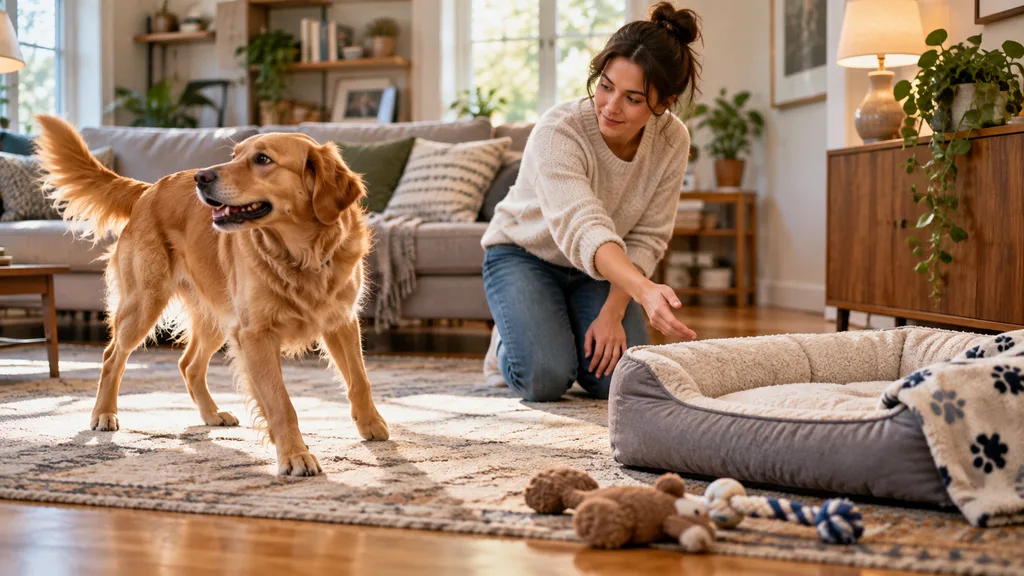
If your dog won’t settle down in the house, you are not alone. Many owners deal with a dog that paces, follows them from room to room, or can’t relax even after a long walk. The good news is that settling is a skill, and most dogs can learn it with structure, patience, and consistency.
Why Your Dog Won’t Settle Down in the House
Dogs rarely struggle to relax for just one reason. These are the most common ones.
Excess Energy
A dog without enough physical outlet may have a hard time switching off indoors. Young and high-energy dogs are especially prone to this.
Lack of Routine
A predictable daily routine around meals, exercise, training, and rest can help dogs understand what to expect throughout the day. That uncertainty keeps many of them alert.
Overstimulation
Busy households, frequent visitors, windows with constant movement, and nonstop play can keep a dog wound up. Some dogs also get more hyper when they are overtired.
Insufficient Mental Enrichment
A dog can be physically tired but mentally restless. Without enough to think about, a dog may invent its own activities, like pacing, chewing, or nudging you for attention.
Anxiety
An anxious dog may have trouble relaxing even in a calm home. Pacing, panting, or shadowing family members can be signs of stress.
Inconsistent Boundaries
If rules about furniture, attention, and play change from person to person, your dog may stay on high alert, unsure what is expected.
Age-Related Factors
Puppies and adolescents often lack self-control, while senior dogs may pace or get restless for different reasons. If pacing is new, sudden, or seems tied to discomfort, check in with your veterinarian first.
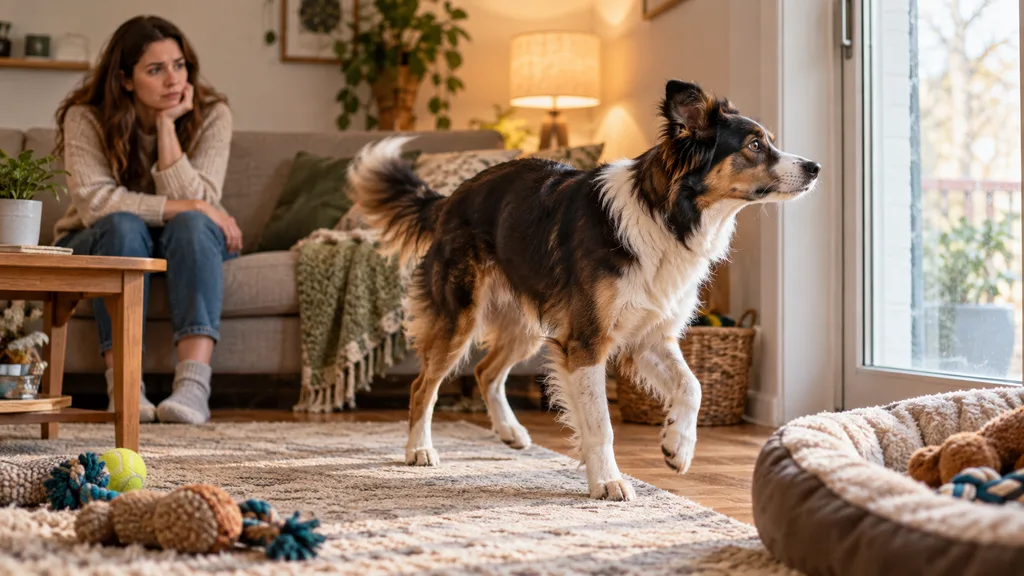
Signs Your Dog Is Struggling to Settle
Look for patterns like these:
- Dog constantly pacing from room to room
- Difficulty lying down or staying down
- Whining, sighing, or following you everywhere
- Jumping up for attention or grabbing toys repeatedly
- Staring at doors or windows
- A hyper dog who won’t calm down even after exercise
Exercise and Mental Stimulation
Exercise matters, but more is not always better. A dog that gets only intense, high-arousal activity may become more revved up. Mix it up:
- Daily walks with time to sniff
- Short training sessions for basic obedience
- Food puzzles, snuffle mats, or chews
- Scent games like hiding treats around a room
Try to finish active time with something calming, like a chew or a quiet walk, so your dog learns to wind down.
Create a Consistent Daily Routine
Routine helps dogs feel secure. Aim for predictable patterns around meals, potty breaks, exercise, training, and rest. Build in quiet time during the day, since many dogs need more downtime than owners expect. A simple structure helps a dog who can’t relax at home learn that rest is part of the day.
How to Teach a Dog to Settle
Teaching calm behavior works best when it is practiced on purpose, not only when your dog is already wound up.
Start With a Mat or Bed
Pick a mat or bed and keep it in a quiet spot. Reward your dog for stepping onto it and lying down.
Reward Calm, Not Excitement
Give treats calmly while your dog stays down. Gradually wait longer between rewards, and release your dog with a clear word like “okay.”
Add a Cue
Once your dog lies down reliably, add a cue such as “settle.” Say it once, in a calm voice, rather than repeating it.
Build Toward the Place Command
The place command teaches your dog to go to a specific spot and stay there. Start close to the spot, then slowly add distance and distractions. If your dog pops up, calmly reset and shorten the session.
Keep sessions short, end on a win, and practice in different rooms as your dog improves.
Reduce Overstimulation
- Create a quiet space away from foot traffic
- Limit window access if outside movement triggers pacing or barking
- Keep greetings low-key when guests arrive
- Use breaks between play sessions
- Watch for early signs your dog is overtired, such as frantic behavior or mouthiness
Common Owner Mistakes
- Relying only on long, intense exercise
- Rewarding pacing or demand behavior with attention
- Repeating cues over and over
- Skipping rest time and naps
- Expecting calm without teaching it
- Changing rules and routines from day to day
- Ignoring signs of stress or discomfort
When Professional Training May Help
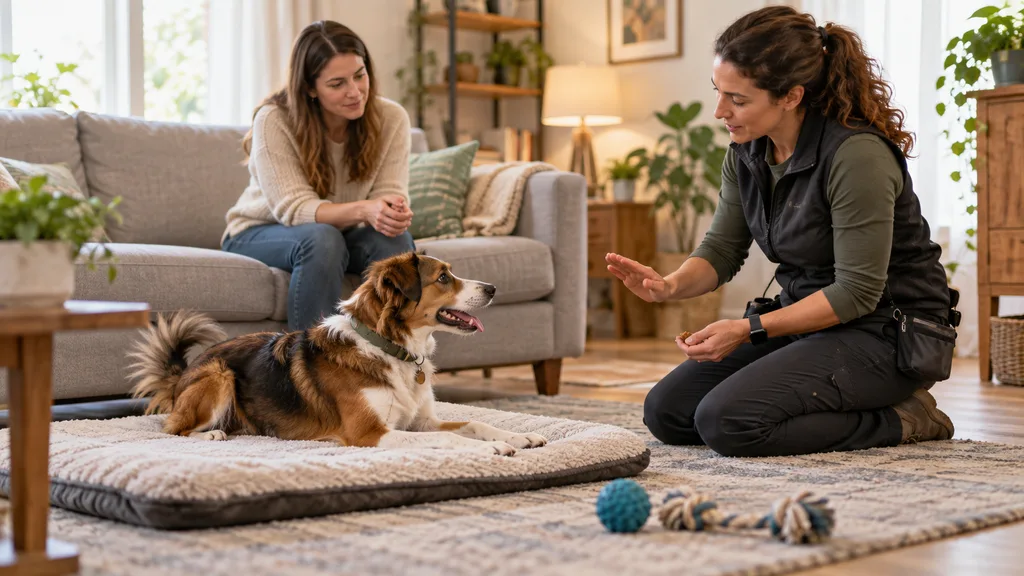
Consider working with a qualified trainer if your dog’s restlessness is constant, if your dog seems anxious or distressed, or if you have tried the basics without steady progress. A trainer can observe your dog, identify what is driving the behavior, and build a plan around your home and goals.
Get Help Building Calm Behavior at Home
A dog that can relax is easier to live with and often feels more secure, too. If you want support with obedience, confidence, and calm behavior at home, a certified trainer can guide you through practical next steps that fit your dog’s needs. Consider reaching out for a consultation to talk through what you are seeing.
Frequently Asked Questions
Why does my dog pace around the house and not relax?
Pacing can come from excess energy, boredom, stress, or a lack of routine. Some dogs also pace when they are overstimulated or overtired. If the pacing is new, constant, or seems tied to discomfort, talk with your veterinarian.
How do I teach my dog to settle?
Start by rewarding your dog for lying down on a mat or bed. Gradually lengthen the time between rewards, then add a cue like “settle.” Keep sessions short and practice when your dog is already fairly calm.
Is exercise enough to calm a hyper dog?
Exercise helps, but it is rarely the whole answer. Mental enrichment, a consistent routine, and teaching calm behavior all play a role. Some dogs also need guidance on how to switch off after activity.
Can older dogs learn to settle?
Yes, dogs of many ages can learn to settle with consistent practice. Older dogs may need shorter sessions or extra comfort. If an older dog is suddenly restless, a veterinary check is a good first step.
