
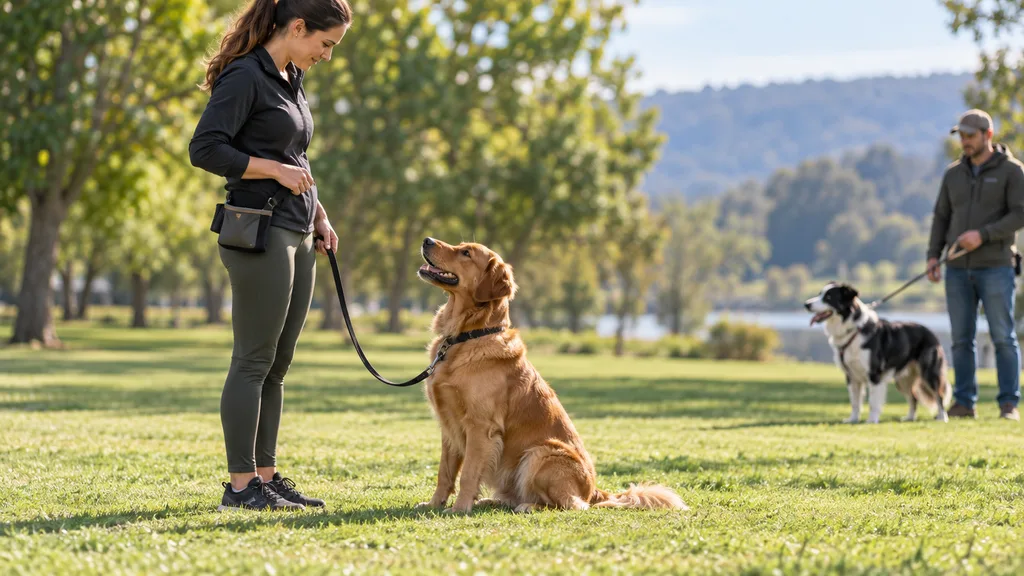
If your dog is overexcited around other dogs, you know the feeling. The leash goes tight, the whining starts, and your focus shifts from enjoying the walk to getting past the next dog. The good news is that excitement is trainable. With the right setup and steady practice, most dogs can learn to stay calm and check in with you instead of fixating on every dog they see.
Why Is My Dog Overexcited Around Other Dogs?
Dogs are social, so interest in other dogs is normal. Overexcitement usually comes down to a few common causes:
- Frustration: Your dog wants to greet, but the leash says no. That built-up energy comes out as lunging, barking, or whining.
- Lack of practice: Dogs with limited calm exposure to other dogs may not know how to handle the moment.
- Reinforced habits: If pulling toward dogs has led to greetings in the past, your dog has learned that excitement works.
- Age and energy: Puppies and adolescent dogs often have less self-control, especially with unmet exercise needs.
- Stress: Some dogs that look excited are actually uneasy, and the behavior is their way of coping.
Signs a Dog Is Overstimulated
Overstimulation often builds before the big reaction. Watch for:
- Pulling hard toward the other dog
- Whining, yelping, or high-pitched barking
- Jumping, spinning, or bouncing
- Ignoring treats, toys, and your voice
- Fast, frantic movement or heavy panting
- Difficulty settling after the dog passes
Catching these early signs gives you a chance to add distance before things escalate.
Excitement vs. Aggression vs. Reactivity
These terms get mixed up, and the difference matters for training.
Overexcitement is usually driven by eagerness. The dog’s body often looks loose and wiggly, and the dog wants to get closer. Reactivity is a strong response to a trigger and can come from fear, frustration, or discomfort. Aggression involves intent to threaten or harm, often with stiff posture, hard stares, or growling.
Body language can be tricky to read, and a dog can show more than one of these at once. If you are unsure, or your dog’s behavior is intense, a professional can help you sort it out safely.
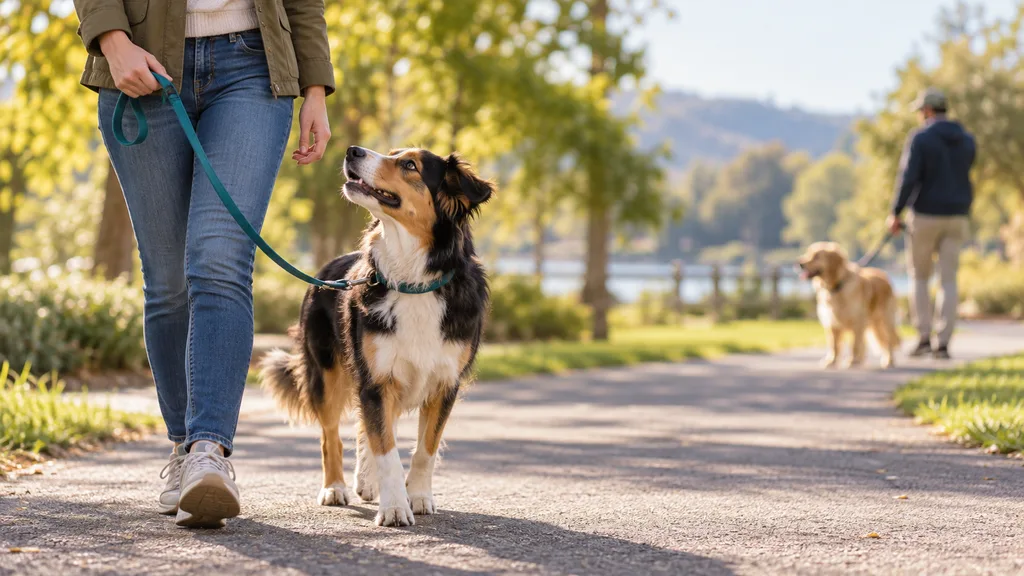
How to Help an Overexcited Dog Stay Calm Around Other Dogs
Start With Calm Leash Handling
Your leash habits shape your dog’s behavior more than most people realize.
- Keep the leash relaxed but controlled. A tight leash can add tension for both of you.
- Stay calm yourself. Dogs often pick up on sudden tension from their handler.
- Use a well-fitted collar or harness your trainer recommends.
- Avoid letting your dog drag you toward other dogs, since this teaches that pulling pays off.
- Skip on-leash greetings while you are working on calm behavior.
Focus and Engagement Exercises
Calm focus starts at home, in low-distraction spaces, before it moves outside.
Name game: Say your dog’s name once. When your dog looks at you, reward right away. Practice until the response is quick and reliable.
Eye contact check-ins: Reward your dog for voluntarily looking at you. Over time, this becomes your dog’s go-to move when something exciting appears.
Engage and walk away: When you spot a dog at a distance, ask for a look, reward, and calmly turn to move away together.
Keep sessions short, use treats your dog loves, and end while your dog is still doing well.
Build Impulse Control
Impulse control teaches your dog that good things come from patience.
- Sit and wait at doors: Your dog waits until you give a release cue.
- Wait at the food bowl: Your dog holds a sit before eating.
- Leave it: Reward your dog for ignoring a treat on the floor, then build toward more tempting items.
- Settle on a mat: Reward calm, relaxed behavior in place.
These skills may seem unrelated to other dogs, but they train the same muscle: choosing calm over instant excitement.
Manage Distance and Distractions
Distance is one of the most useful training tools. Working at a distance where your dog can notice another dog without becoming overwhelmed can make training easier. The American Kennel Club recommends beginning below your dog’s reaction threshold and gradually progressing from there.
- Start far enough away that your dog can notice the other dog and still respond to you.
- Reward calm behavior and check-ins at that distance.
- Gradually decrease distance only when your dog stays relaxed.
- If your dog loses focus, calmly increase distance and try again.
Choose quieter times and places for early practice. A parking lot edge or wide-open space is easier than a crowded sidewalk. Avoid dog parks while you are building skills, since the intensity is hard to control.
Common Owner Mistakes
- Getting too close too soon: This sets your dog up to fail.
- Punishing excitement: Harsh corrections can make dogs associate other dogs with stress.
- Allowing pulling to greet: This rewards the exact behavior you want to change.
- Practicing only during real walks: Training needs low-pressure repetition, not just high-pressure moments.
- Skipping exercise and mental enrichment: A dog with pent-up energy has a harder time staying calm.
- Expecting quick fixes: Progress is usually gradual, and every dog learns at a different pace.
If your dog’s behavior changes suddenly, check in with your veterinarian to rule out health factors.
When Professional Training May Help
Consider working with a qualified trainer if:
- Your dog’s excitement is intense or hard to interrupt
- You are unsure whether the behavior is excitement, fear, or reactivity
- Walks feel stressful or unsafe
- You have tried the basics and are not seeing steady progress
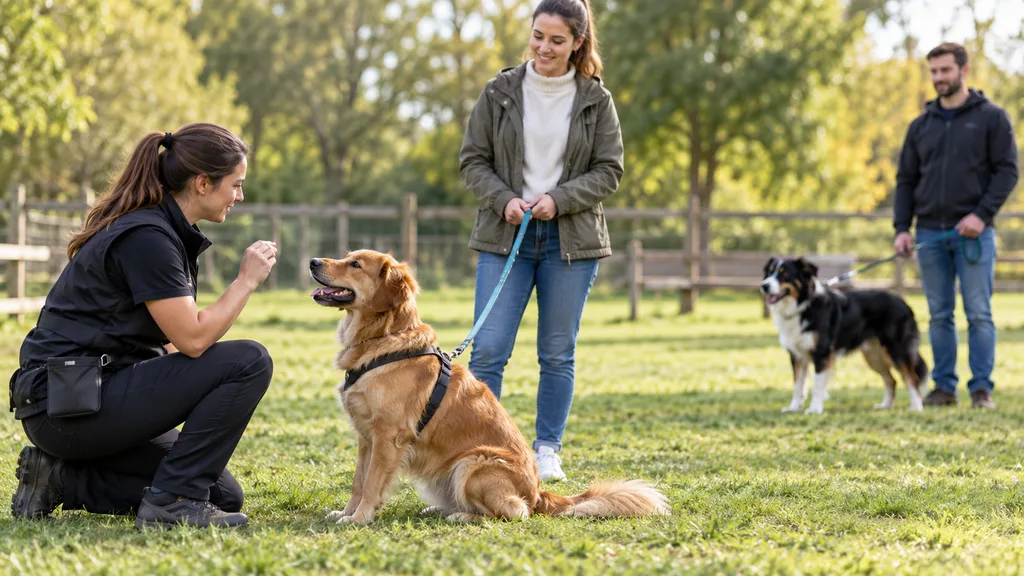
A trainer can observe your dog in person, tailor a plan to your dog’s temperament, and coach you on timing and handling.
Building Calm Behavior for the Long Run
Helping a dog who is overexcited around other dogs takes patience, but small wins add up. If you would like support with obedience, confidence, and calm behavior at home and on walks, reach out to a local trainer who can guide you through the next steps at a pace that fits your dog.
Frequently Asked Questions
Is It Normal for My Dog to Get Overexcited Around Other Dogs?
Yes, many dogs find other dogs exciting, especially young or social dogs. It becomes a problem when the excitement makes walks stressful or unsafe. Training can help your dog learn calmer ways to respond.
Why Is My Dog Fine Off Leash but Overexcited on Leash?
The leash can create frustration because your dog cannot approach freely. Some dogs also feel more tension on leash because they cannot move away. Building calm leash skills and practicing at a comfortable distance can help.
Should I Let My Dog Say Hello to Other Dogs While Training?
It is usually best to pause on-leash greetings while you work on calm focus. Greetings can reinforce pulling and excitement. Once your dog is more consistent, a trainer can help you decide when and how to reintroduce them.
How Do I Know if My Dog Is Excited or Reactive?
Excited dogs typically look wiggly and eager to get closer, while reactive dogs may seem tense or want to create distance. The line can blur, and the two can overlap. A trainer can assess your dog’s body language in person.
