
Introduction
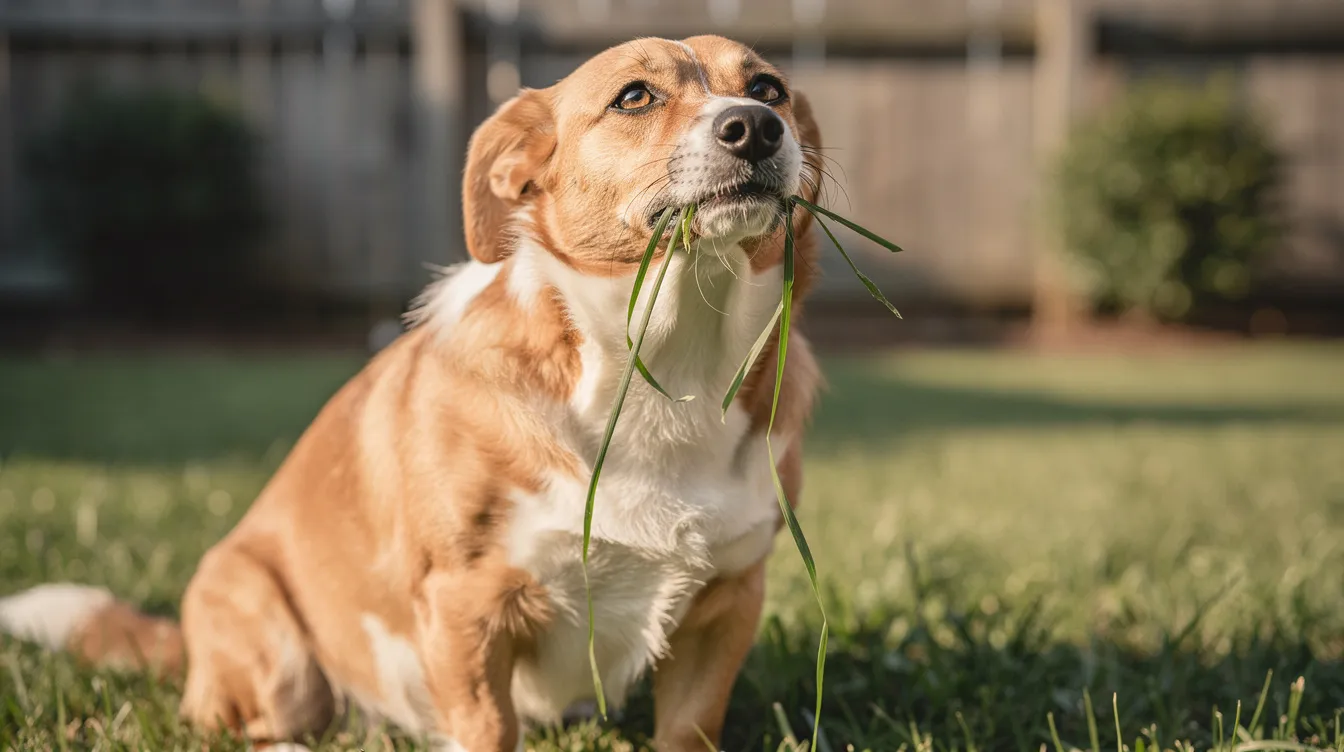
Dogs eat grass for several reasons, including natural foraging behavior, curiosity, boredom, and enjoyment of its taste or texture. Occasional grass eating is generally not a cause for concern when your dog is otherwise healthy and behaving normally.
However, frequent grass consumption, repeated vomiting, appetite changes, or other signs of illness may indicate an underlying health concern. Understanding why dogs eat grass can help you distinguish normal behavior from situations that require veterinary attention.
Understanding Dog Grass Eating Behavior
Grass eating is one of the most frequently reported behaviors across all breeds, ages, and health statuses. Around 70% of dogs eat plant material weekly or daily, according to research published in Applied Animal Behaviour Science. Whether your dog nibbles a few blades on a walk or spends time grazing in the backyard, this behavior is remarkably widespread – and rarely a cause for worry.
What Constitutes Normal Grass Eating
Normal grass eating typically follows predictable patterns. Many dogs engage in selective grazing – choosing specific grass types, favoring fresh green blades, and eating grass occasionally rather than in large volumes. Seasonal variation is common: dogs tend to graze more in spring and fall when grass is lush and green, and more frequently before meal times or earlier in the day.
A dog eating grass a few times per week, without showing signs of distress before or after, fits squarely within normal behavior. Normal occasional grass eating does not indicate a health problem. Most dogs don’t vomit afterward, and only a quarter of grass-eating dogs actually do. This is simply part of how many dogs interact with their environment – exploring textures, tastes, and sensory experiences during outdoor time.
When to Call the Vet About Your Dog Eating Grass
Occasional grass eating is common, but certain symptoms may indicate that your dog needs veterinary attention.
Contact your veterinarian if your dog:
- Suddenly starts eating unusually large amounts of grass.
- Experiences repeated vomiting or persistent diarrhea.
- Refuses food or shows noticeable changes in appetite.
- Appears unusually tired, weak, or uncomfortable.
- Eats grass that may have been treated with pesticides or other harmful chemicals.
- Frequently consumes grass alongside other non-food items.
Seek emergency veterinary care if your dog repeatedly tries to vomit without bringing anything up, develops a swollen abdomen, or shows signs of severe distress.
Grass eating alone does not confirm a medical condition. Your veterinarian can help determine whether an underlying health issue is present.
Common Reasons Dogs Eat Grass
Understanding why your dog is eating grass requires looking beyond the surface. While the behavior itself is usually benign, multiple motivations can drive it – from deep evolutionary instincts to simple boredom on a slow afternoon.
Instinctive and Ancestral Behavior
Dogs are primarily carnivores, but their ancestors were opportunistic feeders. Wild canids sometimes consume plant material as part of their natural diet – studies of wolf stomach contents reveal that 11–47% contain plant matter. This suggests a genetic predisposition to sampling vegetation that domestication hasn’t eliminated.
Even though dogs eat meat as the foundation of their diet, the instinct to forage and explore non-meat food sources persists. Grass-eating dogs across every breed – from retrievers to terriers – display this behavior, reinforcing that it’s hardwired rather than learned. Your dog isn’t confused about what to eat; it’s following a behavioral script written by thousands of years of evolution.
Nutritional and Digestive Factors
Grass contains fiber, but eating grass does not necessarily mean your dog has a nutritional deficiency. Dogs receiving a complete and balanced diet may still eat grass for several reasons. If you suspect your dog’s diet is contributing to the behavior, consult your veterinarian before making dietary changes.
Grass contains fiber that can help soothe stomach problems, though it can also work the other way – eating grass can irritate a dog’s stomach lining in some animals. One well-documented case involved an 11-year-old poodle that ate plants consistently for years and stopped entirely when switched to a high-fiber diet, suggesting the behavior was driven by a gap in dietary requirements.
The self-medication hypothesis – the idea that dogs eat grass to induce vomiting when they have an upset stomach – is popular but poorly supported by data. In a 2008 survey, fewer than 1 in 10 dogs were ill before eating grass. Research suggests that dogs experiencing gastrointestinal distress actually ate less grass, not more, which contradicts the self-medication theory. While some dogs do vomit afterward, less than 25% of dogs vomit after eating grass – far too few to support gastric reflux or nausea as the primary driver.
Psychological and Behavioral Motivations
Dogs may eat grass due to boredom or lack of stimulation – and this is one of the most underappreciated causes. Dogs that don’t receive enough mental stimulation or physical stimulation during the day may turn to grass chewing simply because there’s nothing else to do. Grass eating can be a sign of boredom or anxiety in dogs, particularly those left outdoors without enrichment or interaction.
Attention-seeking is another common driver. If owners react strongly when their dog is eating grass – pulling the leash, scolding, or even laughing – the dog may learn that this behavior reliably produces a response. This creates a reinforcement loop that’s easy to establish and harder to break.
Anxious dogs may also use grass eating as a displacement or comfort-seeking behavior during stressful situations like thunderstorms, unfamiliar environments, or encounters with other dogs. And many dogs enjoy the taste or crunch of fresh grass, especially younger dogs who are naturally more exploratory and drawn to novel textures in their environment.

Safety Considerations and Risk Management
While eating grass is a very common behavior in dogs, the grass itself can carry real hazards. Understanding where your dog grazes – and what might be on that grass – is essential for protecting your dog’s health.
Safe Grass Eating Guidelines
Not all grass is equal, and a few precautions go a long way in keeping your pets safe:
- Verify your lawn is chemical-free. Dogs should not eat grass treated with harmful chemicals. Confirm that pesticides, herbicides, and fertilizers used on your lawn are pet-safe before allowing free access.
- Monitor for fecal contamination. Grass can carry intestinal parasites from fecal contamination left by rodents, stray animals, or other dogs. Check grazing areas regularly.
- Control portion sizes. If your dog eats grass several times daily or consumes large volumes, limit outdoor access and redirect with toys or basic obedience commands.
- Maintain parasite prevention. Keep heartworm and deworming schedules current so that incidental soil or fecal exposure through grass eating doesn’t lead to parasitic infection.
- Know your lawn treatment history. Chemical treatments can pose risks to dogs eating grass. If your lawn was recently treated, keep your dog off until products have fully dried and settled.
Environmental Hazards Assessment
Where your dog grazes matters as much as how often. Here’s a comparative look at common scenarios:
| Location Type | Safety Level | Key Risks | Recommended Action |
|---|---|---|---|
| Home lawn (untreated/organic) | High | Minimal; natural exposure only | Allow supervised grazing; maintain regular vet checkups |
| Public parks (unknown treatment) | Medium | Possible pesticides on grass, dog feces, fertilizers | Keep your dog on a leash in grassy areas to prevent grazing; check for treatment signs |
| Athletic fields/golf courses | Low | Recently applied herbicides; irrigation runoff | Keep dogs off entirely until safe; wash paws after any contact |
| Wild areas/roadsides | Variable–High Risk | Unknown toxic plants, agricultural chemicals, parasites | Prevent ingestion; leash control; avoid allowing any grazing |
Pesticides on grass can be toxic to dogs. For context, in a review of 150 glyphosate exposure cases over eight years, approximately 15% were serious, underscoring that chemical lawn treatments are a genuine risk – not a hypothetical one.

Common Challenges and Solutions
Even when grass eating is normal behavior, certain patterns can create problems that require thoughtful intervention. Here are the most common challenges owners face and practical solutions for each.
Excessive or Compulsive Grass Eating
When a dog eats grass daily in large quantities, vomits regularly, or reduces food intake as a result, the behavior has crossed from normal into potentially compulsive territory. This could signal serious medical conditions like inflammatory bowel disease, nutrient deficiencies, or chronic anxiety.
The solution involves a two-track approach: first, consult your vet to rule out any medical problem affecting your dog’s stomach or digestive system. Second, address behavioral factors – provide environmental enrichment through puzzle toys, increase exercise, and create structured routines. For dogs showing signs of compulsive behavior, a behavioral board and train program can provide the intensive structure needed to break the cycle.
Grass Eating in Contaminated Areas
Many dogs gravitate toward grass during walks through public spaces where treatment histories are unknown. The risk isn’t just pesticides – it includes parasites, bacteria from animal feces, and toxic plants that may look like ordinary vegetation.
To prevent your dog from eating grass in unsafe areas, keep your dog on a leash in grassy areas to prevent grazing. Train a reliable “leave it” command through impulse control training so your dog’s ability to self-regulate improves. Use treats to redirect your dog from eating grass, and schedule walks after meals to decrease grass-eating behavior, since dogs tend to graze more when hungry.
Attention-Seeking Through Grass Consumption
Some dogs learn that eating grass gets a guaranteed reaction from their owners – whether it’s alarm, scolding, or physical intervention. The grass itself isn’t the point; the attention is.
The fix requires consistency: respond neutrally when your dog reaches for grass, and reward alternative behaviors instead. Provide mental stimulation to reduce boredom-related grass eating – interactive toys, training sessions, and structured play. Train your dog to perform tricks instead of eating grass, using positive reinforcement to build new habits. For persistent cases, working with a professional puppy or adult dog training program can help reshape attention-seeking patterns effectively.
Frequently Asked Questions About Dogs Eating Grass
Why do dogs eat grass and then throw up?
Some dogs vomit after eating grass because it may irritate their digestive system. However, many dogs eat grass without vomiting, so grass consumption does not necessarily indicate an upset stomach.
Should I stop my dog from eating grass?
Occasional grass eating may not require intervention if your dog is healthy and the grass is free from harmful chemicals. Prevent your dog from eating treated grass, unfamiliar plants, or large quantities of vegetation.
Does eating grass mean my dog has a nutritional deficiency?
Not necessarily. Dogs receiving a complete and balanced diet may still eat grass out of curiosity, natural foraging behavior, or enjoyment of its texture.
Why is my dog suddenly eating a lot of grass?
A sudden increase in grass consumption may be associated with digestive discomfort, stress, boredom, or another change in behavior. Contact your veterinarian if the behavior persists or occurs alongside symptoms of illness.
Can boredom cause dogs to eat grass?
Yes, some dogs may chew grass as a way to occupy themselves when they lack appropriate physical or mental stimulation. Regular walks, enrichment activities, and structured training may help reduce boredom-related behaviors.
Is eating grass safe for puppies?
Occasional grass chewing may be part of normal puppy exploration. Supervise your puppy and avoid areas containing pesticides, animal waste, toxic plants, or other potential hazards.
When should I worry about my dog eating grass?
Contact your veterinarian if grass eating becomes excessive, starts suddenly, or occurs alongside repeated vomiting, diarrhea, appetite loss, or unusual tiredness.
Conclusion and Next Steps
In most cases, grass eating is exactly what it appears to be – a normal, instinctive behavior shared by most dogs. It’s rooted in ancestral feeding patterns, sometimes driven by dietary needs or boredom, and rarely indicates that your dog is sick. The key is knowing where the line falls between harmless grazing and behavior that signals an underlying health issue requiring appropriate treatment.
Here’s what to do right now:
- Assess your lawn safety. Confirm that your yard is free of harmful pesticides, herbicides, and fertilizer residues before letting your dog graze freely.
- Observe your dog’s patterns. Track when, how often, and how much grass your dog consumes. Note whether your dog shows signs of illness before or after – this information is valuable for your vet.
- Increase enrichment. Ensure your dog gets enough mental stimulation and physical exercise daily to reduce boredom-driven grass eating.
-
Veterinary Disclaimer: This article is intended for general educational purposes and is not a substitute for professional veterinary advice, diagnosis, or treatment. Consult your veterinarian if your dog shows signs of illness or sudden changes in behavior.
- Seek professional help when needed. If your veterinarian has ruled out medical concerns and your dog’s grass eating appears related to boredom or difficulty responding to commands outdoors, structured training may help. Our dog training services in Fredericksburg, VA focus on practical obedience, engagement, and everyday manners. Contact us for a free consultation at (540) 390-1945.
Related topics worth exploring include general obedience training for impulse control, environmental enrichment strategies for anxious dogs, and dietary adjustments that may reduce your dog’s drive to seek supplemental plant material.
Additional Resources
- Veterinary consultation guidelines: If grass eating is accompanied by vomiting, diarrhea, weight loss, or lethargy, schedule a vet visit to evaluate your dog’s digestive tract and rule out medical conditions like inflammatory bowel disease or gastric reflux.
- Local lawn care: Fredericksburg-area pet parents should ask their lawn care providers about pet-safe treatment options. Look for organic or certified pet-friendly herbicide and fertilizer programs.
- Professional training: For dogs whose grass eating stems from boredom, anxiety, or attention-seeking, structured behavioral training programs can teach reliable commands like “leave it” and build the impulse control that keeps your dog safe during walks and off-leash time.