
Key Takeaways
- Puppy biting is completely normal during teething, play, and excitement, especially from 8 to 20 weeks, but it still needs calm, consistent guidance.
- Learning how to get a puppy to stop biting starts with redirection to chew toys, short training sessions, and simple obedience practice like sit, down, place, and recall.
- Yelling, rough play, or mixed rules between family members can extend nipping and biting well past the typical biting stage.
- Rest, potty breaks, and structured schedules matter just as much as commands. Puppies require about 18 to 20 hours of sleep daily to prevent biting frenzies.
- If biting stays intense, breaks skin, or involves aggressive or fearful behavior, professional dog training or a certified applied animal behaviorist can help.
Introduction: How to Get a Puppy to Stop Biting Without Stress
If you just brought a new puppy home and your hands already look like they lost a fight with a cactus, you are not alone. Figuring out how to get a puppy to stop biting is one of the most common challenges dog owners face in those first weeks. Those needle-sharp puppy teeth are no joke, and they seem to find skin, sleeves, and ankles with impressive accuracy.
The good news is that puppy biting is completely normal. Puppies explore the world primarily using their mouths, much like human babies use their hands. Puppy biting typically lasts between three and six months, and with the right dog training, your puppy can learn softer play and calmer choices. The goal is not to shut down all normal mouthing overnight. It is to teach your puppy bite inhibition and help them understand what is acceptable before habits set in.
This guide covers why biting happens, what to do about it, which training skills help most, and when to consider outside support.
Why Puppy Biting Happens
Puppies bite for several overlapping reasons, and almost none of them involve anger or dominance. Understanding the drivers behind your puppy’s behavior makes it much easier to respond the right way.
Teething and sore gums. Puppies have 28 deciduous teeth that begin falling out around 12 to 16 weeks. Permanent teeth typically come in by six to seven months. During this teething process, gums may feel swollen or tender, so puppies often chew and gnaw to relieve discomfort. Nipping at hands, sleeves, and ankles is often more connected to play, exploration, and excitement, but offering safe chew toys can still help redirect the mouth to something appropriate.
Play biting and exploration. When puppies play with other puppies, they wrestle, chase, and mouth each other constantly. This is how young puppies learn social boundaries. Puppies explore toys, furniture, and your fingers because their mouths are their primary tools for understanding the world. A playful puppy grabbing at your hand is doing what comes naturally, not trying to cause harm.
Excitement and overstimulation. A puppy grabs and nips more when arousal spikes. Kids running, rough play, or too much handling without rest can trigger a puppy temper tantrum of biting. Puppies may bite harder when overtired or overstimulated, which often catches owners off guard.
Breed tendencies. Herding breeds may heel-nip instinctively, while retrievers tend to carry everything in their mouths. These breed-typical patterns influence biting behavior and may require breed-specific outlets.
Puppy bite inhibition. This is the learned ability to control how hard a puppy bites. Puppies often begin learning bite inhibition from their littermates. During social play, if one puppy bites too hard, the other may yelp and stop playing. This helps puppies learn to mouth more gently. Bite inhibition can help dogs control mouthing force as they mature, which is one reason early social learning with the litter is important before puppies go to new homes, often around 8 weeks of age or later.
When Puppy Biting Is Normal vs When It Needs Extra Attention
Normal puppy biting looks like quick nips during a play session, playful mouthing of hands that stops easily with redirection, and bites that gradually soften as weeks pass. Many puppies go through the most intense mouthing stage between 8 and 20 weeks, with improvement as adult teeth come in around 6 to 7 months and training becomes more consistent. Some puppies, especially active breeds or puppies with reinforced biting habits, may need extra structure into adolescence.
Excessive biting can be a sign of a tired or overwhelmed puppy, not a “bad” dog. Watch for patterns. Does biting spike when your puppy missed a nap or needs a potty break?
Warning signs that need extra attention:
- Stiff body, hard eye contact, or a puppy that does not relax with space
- Repeated biting that breaks skin or draws blood
- Growling that does not ease when you step back
- Guarding food, toys, or resting spots
- Fearful behavior around people or other dogs
Sudden changes in your puppy’s behavior could signal pain from retained baby teeth, oral irritation, infection, or another medical issue. A veterinary check-up is worth considering if biting escalates without explanation. If biting feels scary or keeps getting worse despite calm, consistent effort, professional training or behavior support can help before habits become harder to change.
How to Get a Puppy to Stop Biting Early
Understanding how to get a puppy to stop biting early comes down to building clear routines, not waiting for the behavior to go away on its own. Here are the strategies that work.
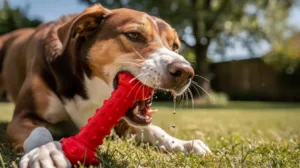
Redirect to appropriate chews. The moment your puppy’s teeth land on human skin, calmly offer a chew toy, a tug toy, or a stuffable rubber toy. Provide chew toys to redirect biting behavior consistently. When teeth stay on the toy instead of you, use verbal praise to reinforce good behavior. Engaging in appropriate play techniques like this can prevent puppies from biting hands over time. You can also play tug safely by keeping the toy between you and the puppy and ending the game if teeth touch skin.
Use “game over” calmly. When nipping and biting happen, freeze. Say “too bad” calmly, then briefly end play or step away for 10 to 30 seconds. Removing attention right away helps teach the puppy that biting stops the fun. Keep the break short, calm, and predictable, then give the puppy another chance to choose a toy or calmer behavior.
Manage energy and rest. Puppies require about 18 to 20 hours of sleep daily. If your puppy continues to bite despite redirection, check the basics. Does your puppy need a nap, a meal, or a potty break? Proper structure of naps, walks, training, and playtime helps reduce puppy anxiety and cuts down on frustration-driven biting. When a puppy’s biting fits seem to come out of nowhere, a temper tantrum from exhaustion is often the real cause.
Keep hands still. Do not jerk your hands away when a puppy grabs at them. Fast movement triggers the chase instinct and makes things worse. Instead, calmly remove your hand and redirect to an appropriate object.
Training Skills That Build Better Puppy Manners
Basic commands and impulse control skills give your puppy a way to choose calm over biting. Short, frequent training sessions of 2 to 5 minutes, repeated several times daily, work better than one long block. Structured puppy training can also help owners build better manners before biting becomes a stronger habit.
- Sit and down. Use these as default behaviors when your puppy wants attention or a greeting. Reward stillness and four paws on the floor instead of jumping or mouthing. This teaches your puppy to earn interaction through good behavior rather than nipping.
- Place or mat training. After exciting play, send your puppy to a mat or quiet space for 1 to 3 minutes. Over time, this becomes a calming cue that interrupts arousal and reduces nipping and biting after high-energy moments.
- Recall. Calling your puppy away from chasing ankles or rough play gives you a way to stop biting before it escalates. Reward the puppy for turning back with a relaxed body and sitting calmly.
- Leave it and wait. These basic commands build restraint and help puppies pause before grabbing at hands, clothing, toys, or food. They work best when practiced in short sessions and repeated in different parts of daily life.
Puppies need regular interactive play to develop social skills, and consistent obedience practice strengthens learned bite inhibition over time. Redirect biting to appropriate toys or activities during every play session to teach the same lesson again and again.
Common Puppy Biting Mistakes to Avoid
Some well-meaning reactions can accidentally keep puppy biting going longer. Here is what to avoid.
- Physical punishment. Yelling, smacking, holding the snout, or alpha-style rollovers do not teach better puppy manners. These reactions can increase fear, excitement, or defensive biting and may damage trust. Calm redirection, reward-based training, and consistent rules are safer and more effective for teaching puppies what to do instead.
- Rough play and hand games. Wrestling, chasing hands, or letting puppies chew fingers sometimes but not others blurs the rules. Tug of war is fine with a toy and clear rules, but avoid using your hands as the target.
- Dramatic reactions. Laughing, squealing, or flailing arms can reward biting behavior by giving the puppy more attention and excitement. A playful puppy reads big reactions as an invitation to keep going.
- Inconsistent household rules. If one person allows play biting while another scolds, the puppy cannot learn the same lesson. Everyone needs to respond the same way so the puppy can clearly connect choices with outcomes.
Stay calm, predictable, and matter-of-fact. Your puppy will learn faster when the rules are simple and never change.
Helping the Whole Household Be Consistent
Every family member needs to follow the same plan for handling puppy bites and play biting. Inconsistency is one of the biggest reasons puppies struggle to stop biting on schedule.
Choose 2 to 3 simple rules everyone follows:
- No teeth on human skin.
- Toys only for play. Appropriate chews stay available.
- Biting ends the game. Stop play, give a time out, then try again.
Hold a quick family meeting to walk through the steps. Adults should supervise all interactions between children and the puppy. Teach kids to move slowly, avoid grabbing, and use tug toys instead of hands for gentle play. Consider posting a short written plan on the fridge so babysitters, guests, and visiting relatives respond the same way. When every person in the household teaches the same lesson, most puppies learn faster and with less confusion.
When Professional Dog Training Can Help With Puppy Biting
Most puppies improve with home practice, patience, and consistency. But some families benefit from reviewing professional dog training programs, especially when biting has not improved despite weeks of effort.
Consider reaching out if:
- Biting regularly breaks skin or draws blood
- Hard biting continues late into the biting stage (past 7 to 8 months)
- Your puppy shows aggressive or fearful behavior around people or another dog in the home.
- You are not sure whether your puppy’s mouthing is normal mouthing or something more concerning
A qualified dog trainer, veterinary behaviorist, or certified applied animal behaviorist can coach you on puppy bite inhibition, calm behavior, socialization, and obedience around real-life distractions. They can also help create a practical training plan tailored to your puppy’s behavior. Supervised puppy training or socialization options may also help when they are appropriate for the puppy’s age, health, and temperament.
Look for trainers who use clear, humane, positive reinforcement methods and have experience with young puppies and behavior modification. If you feel stuck or overwhelmed, reaching out locally before habits set in can make a real difference.
Final Thoughts: Raising Better Puppy Manners Around Biting
Learning how to get a puppy to stop biting is about patient guidance, not punishment. Puppies naturally nip, mouth, and test boundaries during the puppy stage. That is how they learn. Your job is to redirect, stay consistent, and give your puppy clear feedback every single time.
Biting behavior usually improves after consistent redirection, short training sessions, and better rest and potty routines. Notice the small wins. Gentler playful mouthing, shorter nipping episodes, and a puppy that chooses a toy over your hand are all signs of growing bite inhibition and impulse control. Many puppies who seemed impossible at 12 weeks turn into well-mannered adult dogs by their first birthday.
If you want extra help with puppy biting, early obedience, or building off-leash manners as your dog matures, consider connecting with a local professional training program. The earlier you start, the smoother the puppy stage will be for everyone in your home.

FAQ
How long does the puppy biting stage usually last?
Most puppies show the most intense nipping and biting between 8 and 20 weeks, with steady improvement as adult teeth come in around 6 to 7 months. Some puppies continue mouthing longer if biting gets attention, if they are overtired, or if they need more structure. Active breeds and herding breeds may also need extra puppy training and clear outlets beyond the early biting stage.
Is it okay if my puppy plays rougher with other dogs than with people?
It is normal for puppies to bite and wrestle more with other dogs than with people. Social play can help puppies learn to control their bite strength, but always supervise to make sure both dogs are comfortable. Interrupt if play escalates to repeated yelps, stiffness, or one-sided chasing, then offer a short break before letting them interact again. Use recall, gentle guidance, or a safe leash break before play becomes too intense.
Should I use a crate or a playpen to help with puppy biting?
A crate or playpen can serve as a helpful quiet space when a puppy is overtired, overexcited, or needs safe rest. Use it as a calm-down tool, never as punishment. Introduce these spaces with treats, toys, and short positive sessions so the puppy sees them as a place to relax rather than a place to fear. When a puppy has a reliable rest spot at home, it becomes much easier to prevent biting during overtired moments.
Do certain toys work better for nipping and biting than others?
Sturdy rubber toys, frozen washcloths for sore gums, and tug toys that keep teeth away from hands work better than soft items that resemble clothes. Teaching a puppy to chew toys instead of hands involves verbal praise each time they choose the right target. Supervise chewing, rotate toys to keep them interesting, and remove damaged toys so puppies do not swallow pieces.
What if my puppy suddenly starts biting more after being calm for weeks?
Check for changes like new people at home, less exercise, schedule shifts, or possible pain that could make the puppy more irritable. Return to basics with shorter play, clear redirection, and more rest. If your puppy continues biting hard or shows signs of discomfort, a vet visit can rule out medical issues. A conversation with a dog trainer can also help identify whether the puppy learned something that accidentally reinforced the biting, like attention from a new household member.
